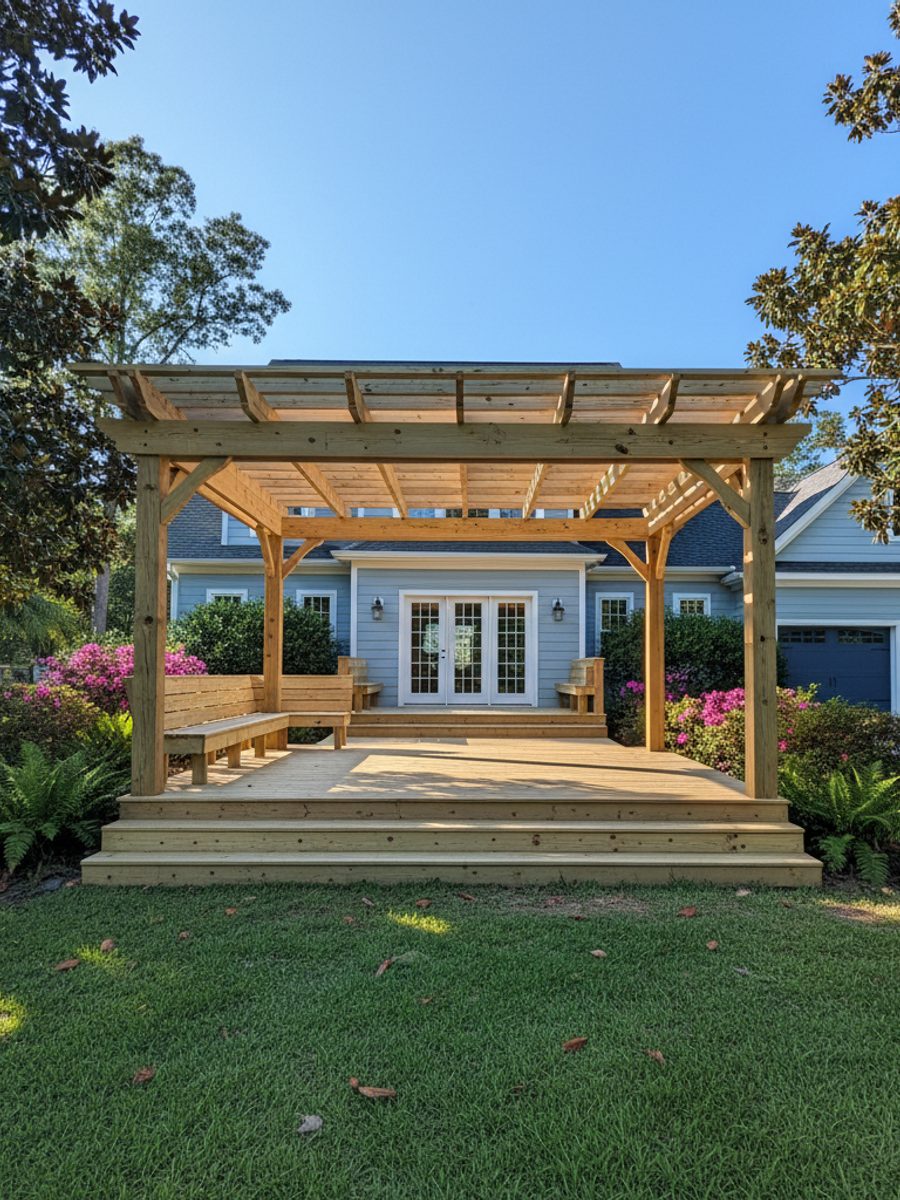
Every homeowner asks this once they've decided to do the work: when should I actually schedule it? For deck building, the answer isn't the same for every part of the job. Framing, concrete, staining, and composite installation all have different windows, and in Olive Branch our clay soil and our weather pattern narrow those windows more than people expect.
Why the calendar actually matters for a deck
A deck is one of the few home improvement jobs where three different materials all have their own rules about temperature and moisture. You've got concrete footings, which need steady curing conditions and don't like a hard freeze or a scorching afternoon. You've got pressure-treated lumber, which comes off the truck wetter than people realize and has to dry out before it'll take a stain. And you've got composite boards, which expand and contract with heat more than wood does and need the right gap spacing set at install. Pick the wrong month and you're not ruining the deck, but you're making extra work for yourself or for whoever builds it.
Fall is the sweet spot, and here's why
September through November is when most of our crews would rather be on a job site here. The ground has dried out from summer, the air isn't soaking everything, and daytime temps in the 60s and 70s are close to ideal for concrete cure, for lumber installation, and for stain adhesion. Humidity drops off noticeably by mid-October, which matters more than people think, because a sealant applied into 80% humidity can trap moisture under the finish and bubble within a season.
Fall also means you're building before the next freeze-thaw cycle starts working on fresh concrete. North Mississippi doesn't get brutal winters, but we do get enough nights below freezing from December through February to matter for anything poured too late and not given time to cure fully.
Spring looks good on paper, but it's riskier here
Spring is the other reasonable window, March into May, before the real heat sets in. The problem in our area is rain. DeSoto County sees its heaviest rainfall and its worst thunderstorm activity in this stretch, and a lot of residential lots here have flat grading and clay-heavy soil underneath that doesn't drain fast. Dig a footing hole on a Tuesday and a Thursday storm can leave it sitting full of water. That delays the pour and can soften the soil right where you need it firm. We watch the forecast closely in spring for this reason, more than any other season.
Summer: not off the table, but it changes how we work
Summer in Olive Branch means consistent mid-90s afternoons with humidity that doesn't let up until evening. You can still build a deck in July, people do it every year, but a few things change. Concrete poured in full sun on a 95-degree day can skin over on the surface in under an hour, which leads to surface cracking if it's not covered and kept damp while it cures. We pour early morning in summer for that reason, not midday. Staining is the bigger issue: oil-based sealers applied in direct heat can flash-dry on the surface before they've soaked into the wood, which means the finish peels within a year instead of lasting the three to five years it should. If a deck gets built in summer, we'll usually recommend waiting on the stain until the wood has had a chance to season, which brings up the next point.
New wood needs time before it gets sealed
Pressure-treated lumber is pushed full of moisture during the treatment process, and it doesn't dry out the day it's installed. Depending on humidity and the time of year, it can take 60 to 90 days for new decking to drop to a moisture level where stain will actually bond instead of sitting on top of the surface and peeling. Build in May, and you're often looking at a late summer or early fall staining appointment, which works out fine since that's a good window anyway.
What the ground and the permit process add to the timing
Most residential lots around Olive Branch sit on clay soil that holds water and shifts more than sandy soil does. Footings here typically need to go below grade deep enough to sit on undisturbed soil, not fill dirt, and we check that on every job regardless of season. A lot of the subdivisions built up through the 1990s and 2000s, as Olive Branch grew into a Memphis suburb, now have original decks from that boom hitting 20-plus years old, which is about the lifespan you'd expect from treated lumber framing even with good maintenance. If you're looking at repair or full replacement on a deck that age, the framing underneath often needs more attention than the surface boards suggest.
Permitting for deck work in Olive Branch and the surrounding DeSoto County towns usually goes through the local building department, and it typically involves a footing inspection before concrete gets poured and a framing inspection before the decking goes down. If your deck attaches to the house, expect the ledger board connection to get looked at closely, since that's the point where water intrusion causes the most damage down the road. If you're in a neighborhood with an HOA, which plenty of the newer subdivisions here have, it's worth checking their guidelines before design starts rather than after the footings are in.
The short version
Fall gives you the best combination of dry ground, mild temperatures, and low humidity for building, curing, and staining. Spring works but carries more rain risk against our clay soil. Summer is doable with adjustments to pour timing and a delay on staining. Winter is fine for planning and design, less fine for pouring concrete. If you're trying to time a project around all of this, Heritage Deck Solutions can walk through what makes sense for your specific lot and the scope of the work.